Texas is the latest state to report a local outbreak of Shigella.  The location is Karnes County, where parents in all  four school districts in the county have been warned about the outbreak.  The warning came in the form of a letter from the Texas Department of Health Services.  A copy can be found here.

The four school districts involved are Falls City, Karnes City, Kenedy, and Runge.  Health officials said there have been "several" confirmed cases of Shigella in the county since April.

The disease is passed from person to person by the fecal-oral route.  The letter sent from the Texas Department of State Health Services states that any individual with Shigella should see a doctor and may be treated with antibiotics. It goes on to say that students may return to school after completing the appropriate antibiotic treatment or 48 hours after the diarrhea has stopped.

Among the places that have seen Shigella outbreaks in 2008 are: New York, Arkansas, Iowa, and South Dakota.


Iowa’s Quad-City Times is reporting on an outbreak of Shigella.   The newspaper says the number of shigellosis cases in Scott County, Iowa  has increased dramatically over the past few weeks.
According to health department officials,  typically there might be five Shigella cases a month reported in Scott County.  So far in May, the health department has seen 22 cases.

The illness, a type of bacterial dysentery, is a stomach infection caused by the shigella bacterium, which is found in the feces of infected persons.

It is spread easily through the failure to wash one’s hands after using the bathroom or restroom, officials said. The main symptoms are diarrhea, often bloody, with cramps.
More can be found here.

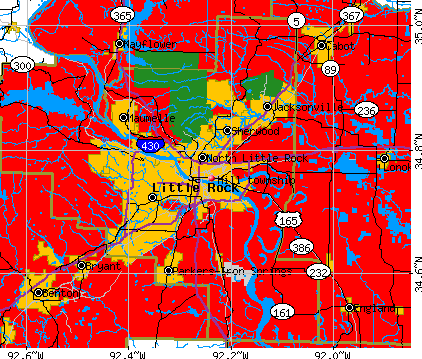
Little Rock, Arkansas—specifically Pulaski County– is Ground Zero for a Shigella outbreak that has reached 18 counties in the Razorback State.   Arkansas has already recorded more cases of Shigella in 2008 than it did during all of last year.

This year’s 118 confirmed cases in less than five months compares to 105 in all of 2007.  And, 63 of this year’s cases involve people who live in Little Rock and the surrounding Pulaski County.

According to the Arkansas Democrat Gazette:

“We have definitely seen an increase in cases,” said Craig Gilliam, director of infection control at Arkansas Children’s Hospital.

Arkansas Children’s has seen 16 cases so far in May, up from 13 in April, 11 in March, and two in February.


Hou Sheng-mou, writing today (05/16/08) in the Taiwan Journal takes a look at "The World Health Report 2007–A Safer Future: Global Public Health Security in the 21st Century."

The Taiwan Journal writer notes the report  "elucidates the importance of cooperation and information sharing among countries in the fight against disease."  WHO Director-General Margaret Chan is quoted saying that "international public health security is both a collective aspiration and mutual responsibility."

Lofty statements, but WHO excludes Taiwan’s 23 million people from the global health network, all part of a secret 2005 secret agreement between the People’s Republic of China and WHO.  It requires Beijing clear any communication from WHO with Taiwan.

Last year, ten days elapsed before China allowed WHO to let Taiwan know that baby corn exports from Thailand was responsible for a shigellosis out break in Denmark. 

 "We were lucky this time around: Our Department of Health confirmed that none of the affected corn had been imported.  Though infection by the Shigella bacterium is seldom life-threating in adults, this example underlines the risk incurred by leaving Taiwan out of the global health network."

The complete article, titled "United front against disease is vital," can be found here.


Last month,  we reported on a Shigella outbreak in New York’s Lower Hudson River Valley involving the Jewish Community.  It was centered on Westchester, Rockland, and Putnam counties, just outside New York City.

Now it appears that outbreak has spread to the Borough Park and Williamsburg communities in Brooklyn.  The New York City Health Department is working with Orthodox Jewish residents in those areas about an ongoing shigella outbreak.
Borough Park and Williamsburg so far this year have had more than 150 cases of shigella, and more than half the cases involve very young children. 

The Alert issued by the New York City Helath Department makes no specific connection to the outbreak in the counties across the Hudson River.  However it does say this:

Large outbreaks of shigella have occurred in recent decades in traditionally observant Jewish communities in Borough Park, Williamsburg and other parts of New York State, New Jersey, Illinois, Maryland and Canada. Some 274 cases of shigella were reported in New York City in 2006, a rate of 3.4 cases per 100,000 people.

 New York health officials have stepped up community outreach activities, working with rabbis and City Council members in the area .   The alert says:

"We encourage residents to be vigilant about hand-washing," said Dr.Sharon Balter, Medical Epidemiologist in the Health Department’s Bureau of Communicable Disease. “Visit your doctor if you are sick, and stay home until you are well. It is especially important for children to stay home from school or day care when sick so that they don’t spread the disease to other kids.”

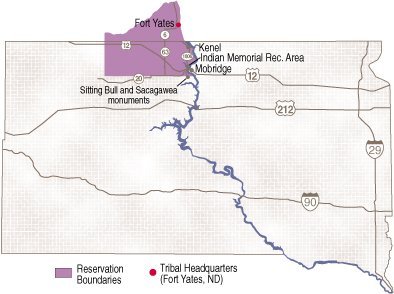
The great Sioux Chief, Sitting Bull, lived, died, and may be buried on the Standing Rock Indian Reservation near Mobridge, South Dakota.   The actual location of Sitting Bull’s grave is the subject of historical dispute.  

There is no dispute that the 8,500 Sioux who today live on the Standing Rock are at the center of an outbreak of Shigella that now concerns the South Dakota Department of Health.  So far this year, there have been 57 confirmed cases of Shigellosis in South Dakota, and all but four in people who live in Corson and Walworth counties that are just across the Mighty Missouri River from one another in north central South Dakota.

Walworth County, with close to 6,000 people, is mostly white and has seen five Shigella cases in 2008.   Then you cross the Mighty Mo at Mobridge into Corson County, one of the counties that make up the Standing Rock  Indian Reservation that spans the South Dakota-North Dakota border.

Most people of Corson are Sioux, members of the Dakota and Lakota nations.  Fewer than 4,200 make Corson home.  There have been 48 Shigella cases so far in 2008 in Corson County.

Reservations like the Standing Rock are big open places with few people.   It makes it necessary to translate numbers.  For example, were a normal urban area of one half million people experience the same rate of Shigella now being experienced in Corson County, it would translate into 5,715 cases.

 South Dakota’s press release on the outbreak can be found here.

Shigella is a bacterium that can cause sudden and severe diarrhea (gastroenteritis) in humans. Shigellosis is the name of the disease that Shigella causes. The illness is also known as "bacillary dysentery." Shigella bacteria can infect the intestinal tract after the ingestion of relatively few organisms. This is why shigellosis is the most communicable of the bacterial-induced diarrheas.

The source of Shigella bacteria is the excrement (feces) of an infected individual that is ultimately ingested by another person. The infectious material is spread to new cases by person-to-person contact or via contaminated food or water. Approximately 20% of the nearly 450,000 cases of shigellosis that occur annually in the U.S are foodborne-related. Generally, the food preparer is the individual who contaminates the food, but food may also become contaminated during processing. Contamination of drinking water by Shigella is a problem that more often occurs in the developing world, but swimming pools and beaches in the U.S. can become contaminated by infected individuals. No group of individuals is immune to shigellosis, but certain individuals are at increased risk, particularly small children. Persons infected with HIV experience shigellosis much more commonly than other individuals.

The Journal News, the  Gannett  newspaper the Lower Hudson Valley including  Westchester, Rockland and Putnam counties in New York, today (4/17/08) is reporting on a Shigella outbreak involving local Jewish schools and day care centers.  Here’s what Jane Lemer writes: 

A total of 67 cases of shigellosis have been reported so far this year, Rockland Commissioner of Health Dr. Joan Facelle said today. No cases of the infectious disease were reported during the same period last year.

A small number of cases started in January, with the majority of the infections occuring in the past three or four weeks, she said.

"We’re been out in the community, talking to the schools, to the rabbis, the families," she said. "We’re using a multi-pronged approach to get the information out there."

Most of the people who have the diseases live or attend school in the Monsey area, she said.

Check out the rest of the story here.

We’ve been watching the Shigella outbreak in the Indianapolis area all winter.   The pace continues with 16 new cases this week and 15 last week.   The county’s health department marked the sixth month of the outbreak with a news release, which in part said:

Marion County’s Shigella outbreak has entered its six-month and local health officials are concerned that the highly contagious disease will gain momentum now that school-aged children have returned from spring break.

The health department has already received 16 new cases this week after receiving 15 new cases last week. More than 325 individuals, mainly pre-school and school-aged children, have been diagnosed with Shigella since the outbreak began in October of 2007. An untold number of others likely have the disease, but have not sought treatment from their health care provider.

During the last outbreak in 2000, Marion County experienced an increase in the number of cases from 15 just before Spring break to more than 120 in the weeks immediately following spring break.

In the release, the health department outlines its strategy of focusing on day care centers, childcare providers, schools, doctors and other health care providers with information about Shigella.   The education campaign, however, does not appear to be working.  The health department says:

Still, the health department continues to see double-digit new cases being reported each week. Bringing an end to the outbreak poses many challenges.

For the complete release, go here.

Adelaide in Southern Australia has an outbreak of Shigella, ABC News is reporting tonight (4/2/08).

Director of the infectious diseases control branch, Ann Koehler, says cases of the illness, known as shigella, have been reported across Adelaide.

Dr Koehler says it is one of the few types of gastro needing treatment with antibiotics because it can spread rapidly.

She says anyone with gastro symptoms such as vomiting, diarrhoea, fever or nausea needs to pay special attention to hygiene and should not return to work or school or prepare food for 24 hours after symptoms ease.

The ABC report with map can be found here.